
AI Voice Dictation Ends After-Hours Charting
Healthcare Technology, Productivity Tools, AI Voice Dictation
How AI Voice Dictation Is Ending After-Hours Charting for Good
Late-night documentation has long been an unwelcome part of clinical life. Today, a new generation of healthcare technology is finally breaking that cycle by turning everyday conversations into complete, accurate medical notes—without adding extra clicks or keystrokes.
The End of “Pajama Time” Charting
For many clinicians, after-hours charting has become so routine it even has a nickname: “pajama time.” Hours spent finishing notes, updating problem lists, and completing billing details chip away at personal time and contribute directly to burnout. Traditional voice recognition tools helped, but they still required structured dictation, templates, and significant editing afterward.
Modern AI Voice Dictation changes that equation. Instead of forcing clinicians to narrate notes in a rigid format, these solutions listen to natural dialogue during the visit and automatically assemble complete, compliant medical documentation in the background. The result is dramatically less time spent in the EHR after clinic hours—and, in many cases, none at all.
How Ambient-Listening AI Works in the Exam Room
The breakthrough comes from ambient-listening technology. Instead of pressing a button to dictate, the clinician simply conducts the visit. With patient consent, an AI-enabled microphone or mobile device passively captures the conversation. Advanced voice recognition engines separate speakers, understand clinical terminology, and identify what is clinically relevant versus small talk.
On top of that, specialized healthcare technology models interpret the encounter: chief complaint, history, exam findings, assessment, and plan. Within minutes, the system generates a structured note, coded diagnoses, and suggested orders that can be reviewed and signed. Instead of typing from scratch, the clinician is simply editing and approving.
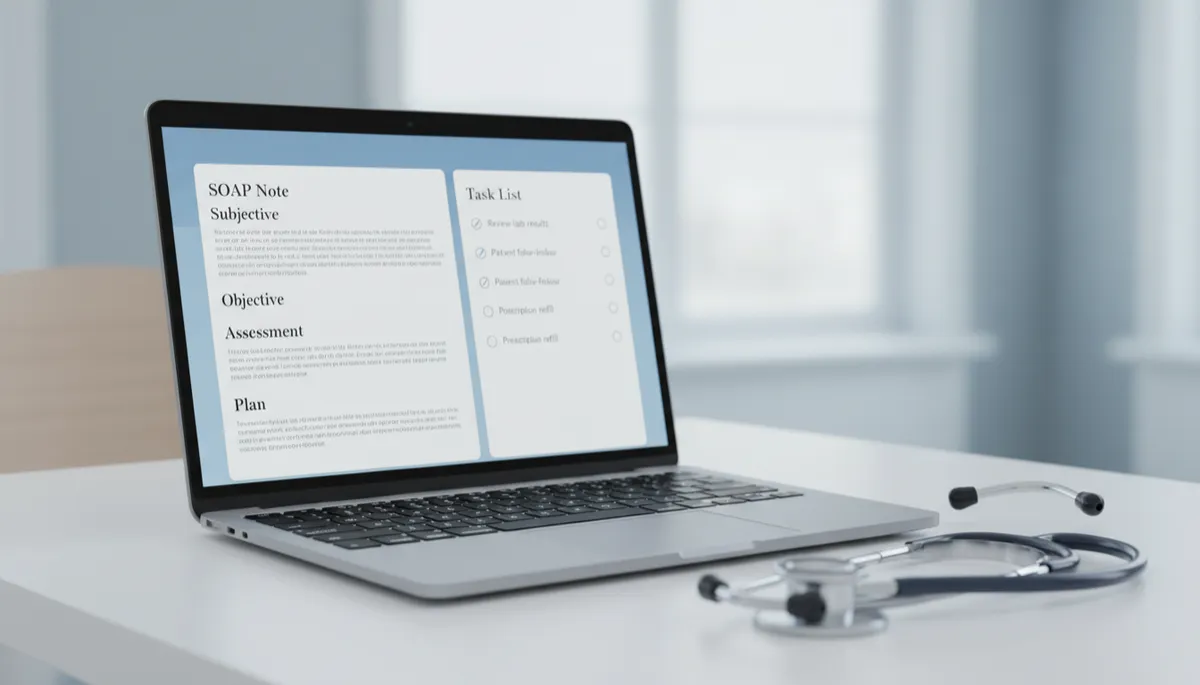
Clinicians reclaim hours each week when AI prepares notes before they leave the room.
From Dictation Tool to Strategic Productivity Platform
Earlier generations of productivity tools focused on speeding up typing. Today’s AI Voice Dictation platforms function more like digital scribes and workflow coordinators. They not only draft documentation, but can also surface guideline-based suggestions, prompt for missing details that affect coding, and create follow-up tasks or patient instructions automatically.
This shift from tool to platform matters. When documentation is generated in real time, clinicians can close most encounters before the patient leaves. That means fewer open charts at the end of the day, less cognitive load carried home, and more predictable schedules for both providers and staff.
💡 Pro Tip: When evaluating AI documentation solutions, ask how often notes are ready for signature immediately after the visit—this is the true measure of after-hours impact.
Quality, Compliance, and the Human Touch
Understandably, clinicians and administrators worry about accuracy and risk. Leading platforms are trained specifically for medical documentation, incorporating specialty language, coding requirements, and privacy safeguards. Many organizations report that AI-generated notes are not only faster but also more complete and consistent than manually typed documentation.
Crucially, the clinician remains in control. AI Voice Dictation does the heavy lifting, but the provider reviews, edits, and signs every note. Rather than replacing clinical judgment, the technology protects it by giving professionals back the time and focus they need for complex decisions and meaningful patient interactions.
A Future Where the Workday Ends on Time
As healthcare technology continues to evolve, one outcome is already clear: AI Voice Dictation and ambient-listening systems are redefining what a normal clinic day looks like. Organizations adopting these solutions are seeing measurable reductions in after-hours charting, improved provider satisfaction, and better patient experiences as clinicians spend more time facing people, not screens.
For healthcare professionals, the promise is simple yet profound: finish your notes while you practice—not long after your last patient has gone home. With the right blend of AI, voice recognition, and thoughtfully designed productivity tools, after-hours charting can finally become a thing of the past.